蔡昕恩
Shin-En Tasi
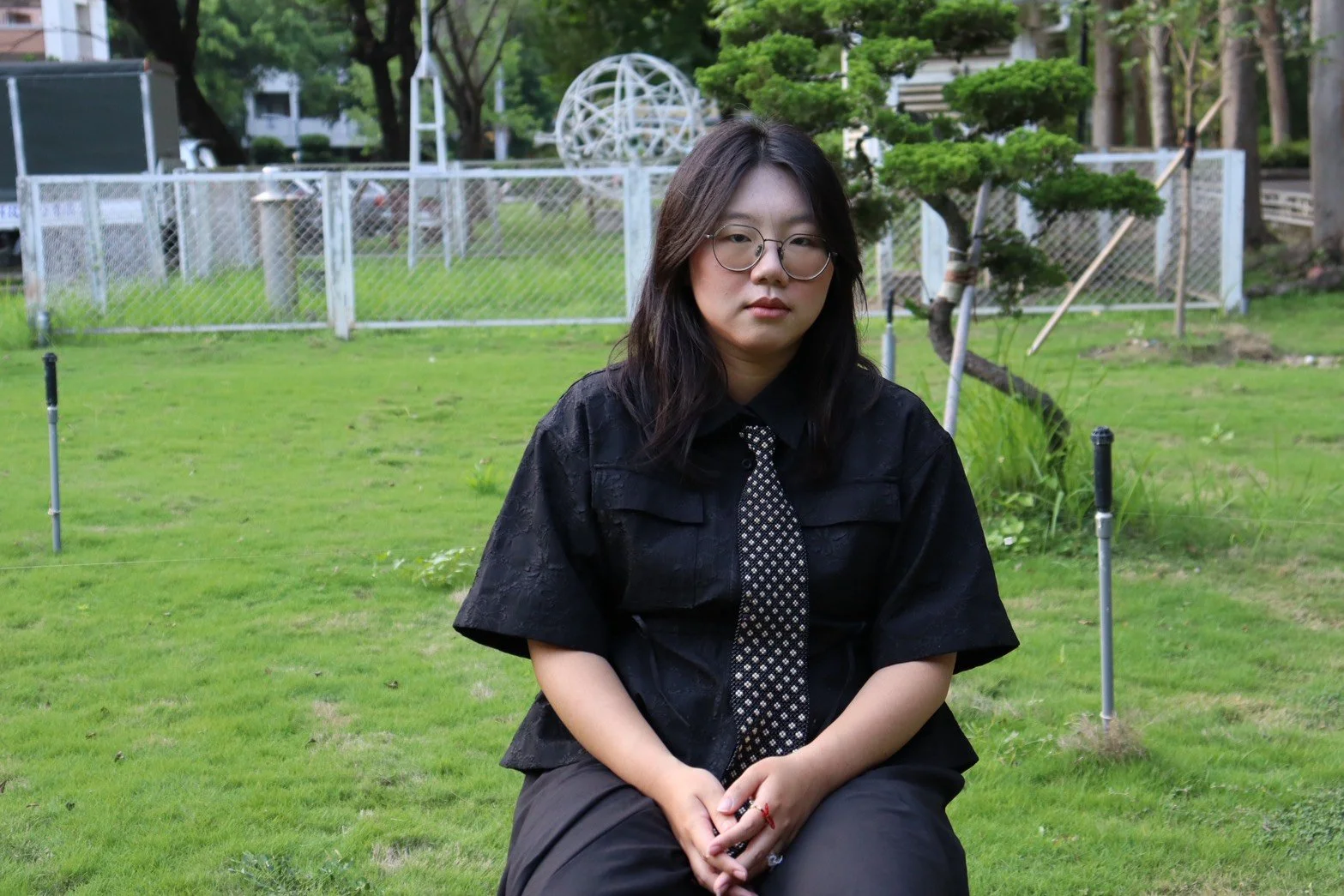
Shin-En Tsai (b.2005, Kaohsiung) is currently studying in the Department of Fine Arts at National Changhua University of Education.
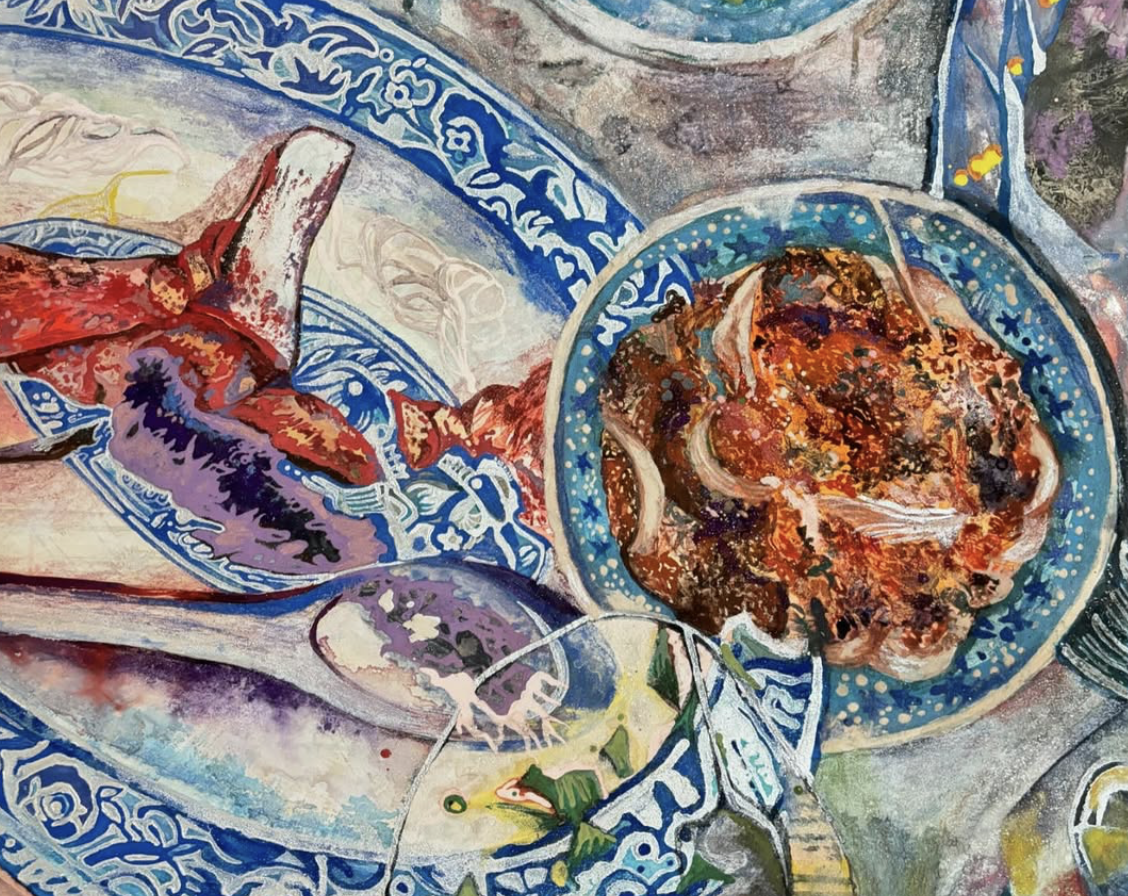
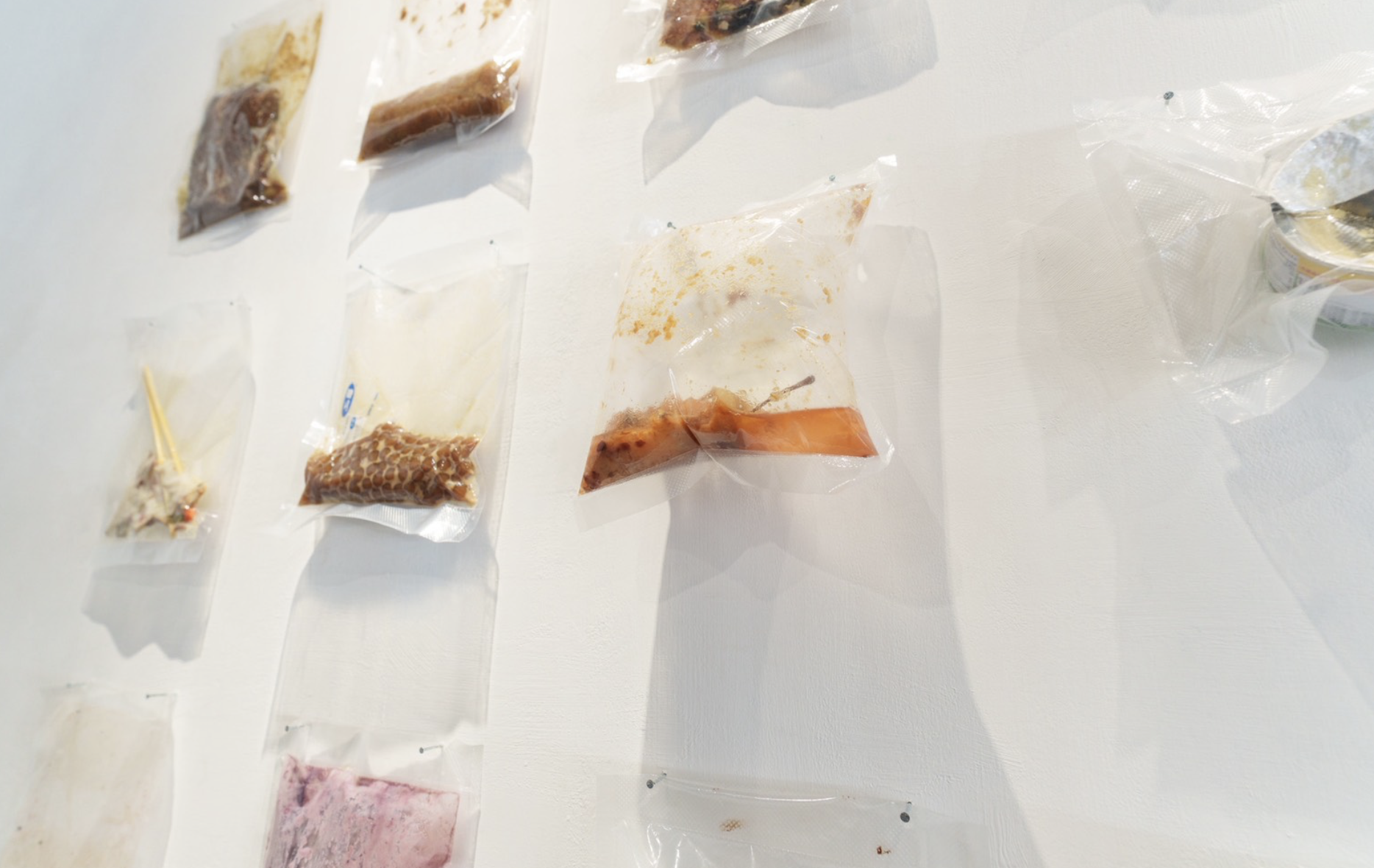
Working under the name 日斤, derived from the deconstruction of the central character 「昕」(Shin) in their given name, the artist maintains a strong interest in language, the humanities, and social theory. This is accompanied by a particular fascination with objects considered to hold little or no value, with food waste and culinary culture forming a central axis within their practice.
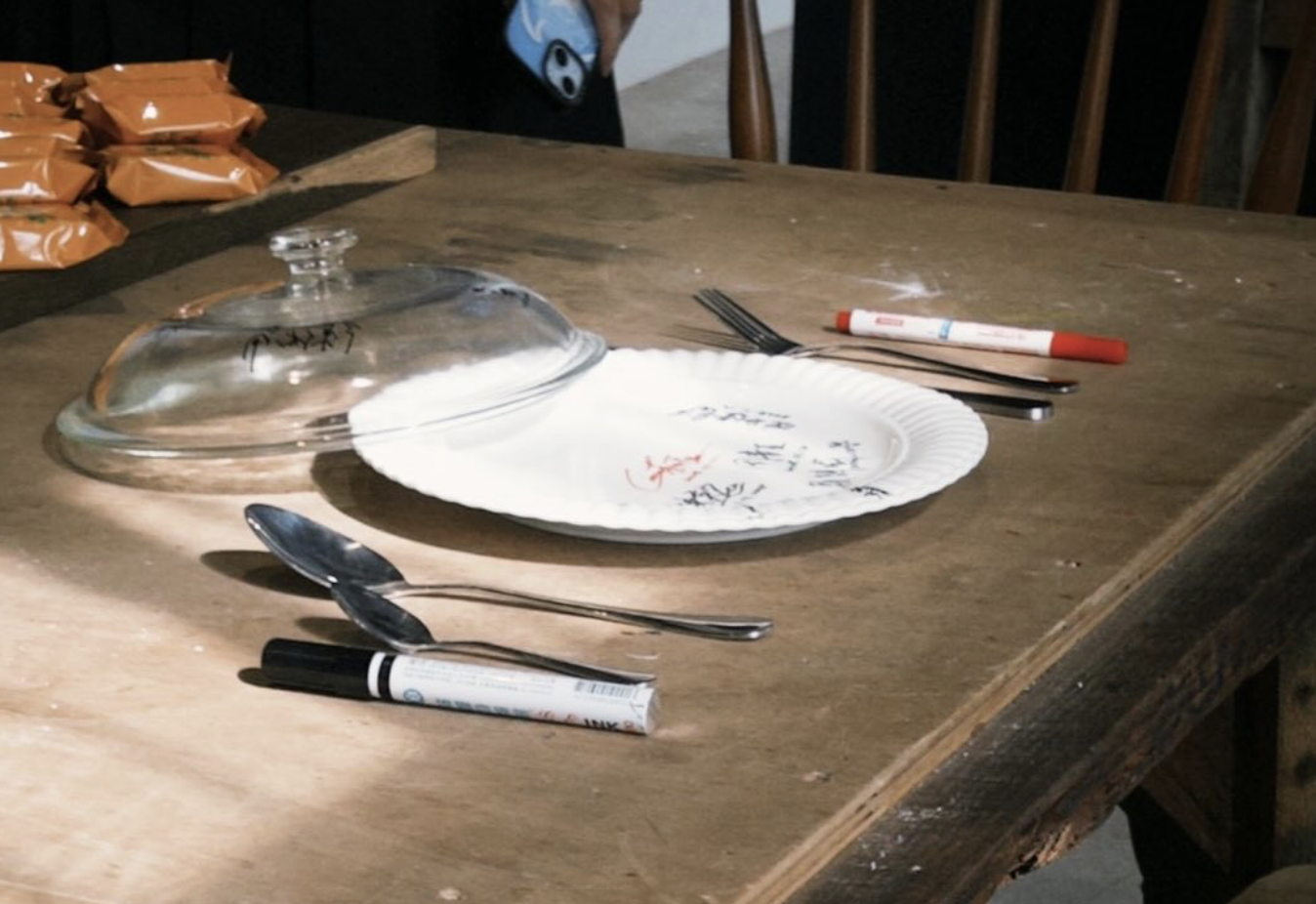
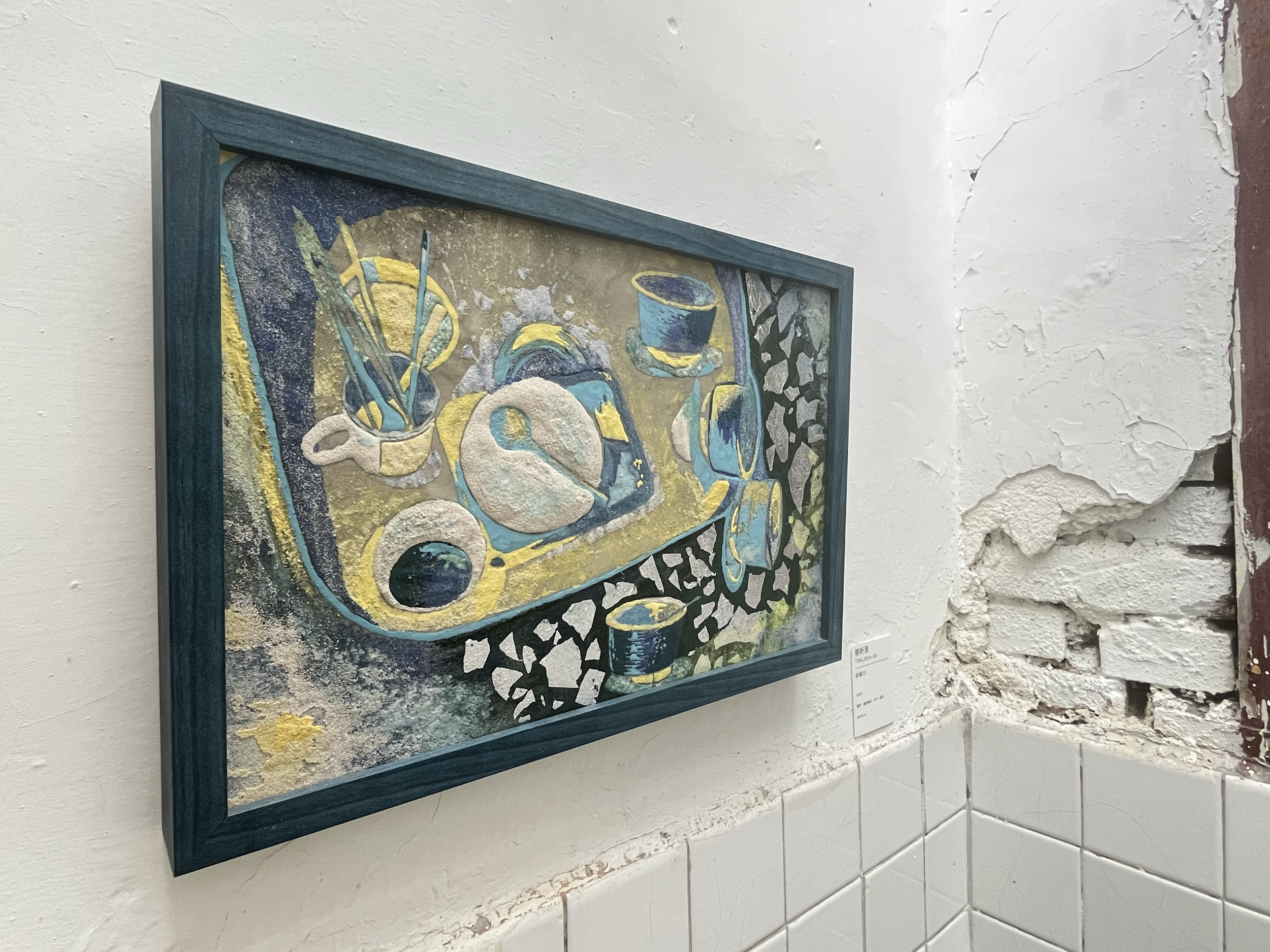
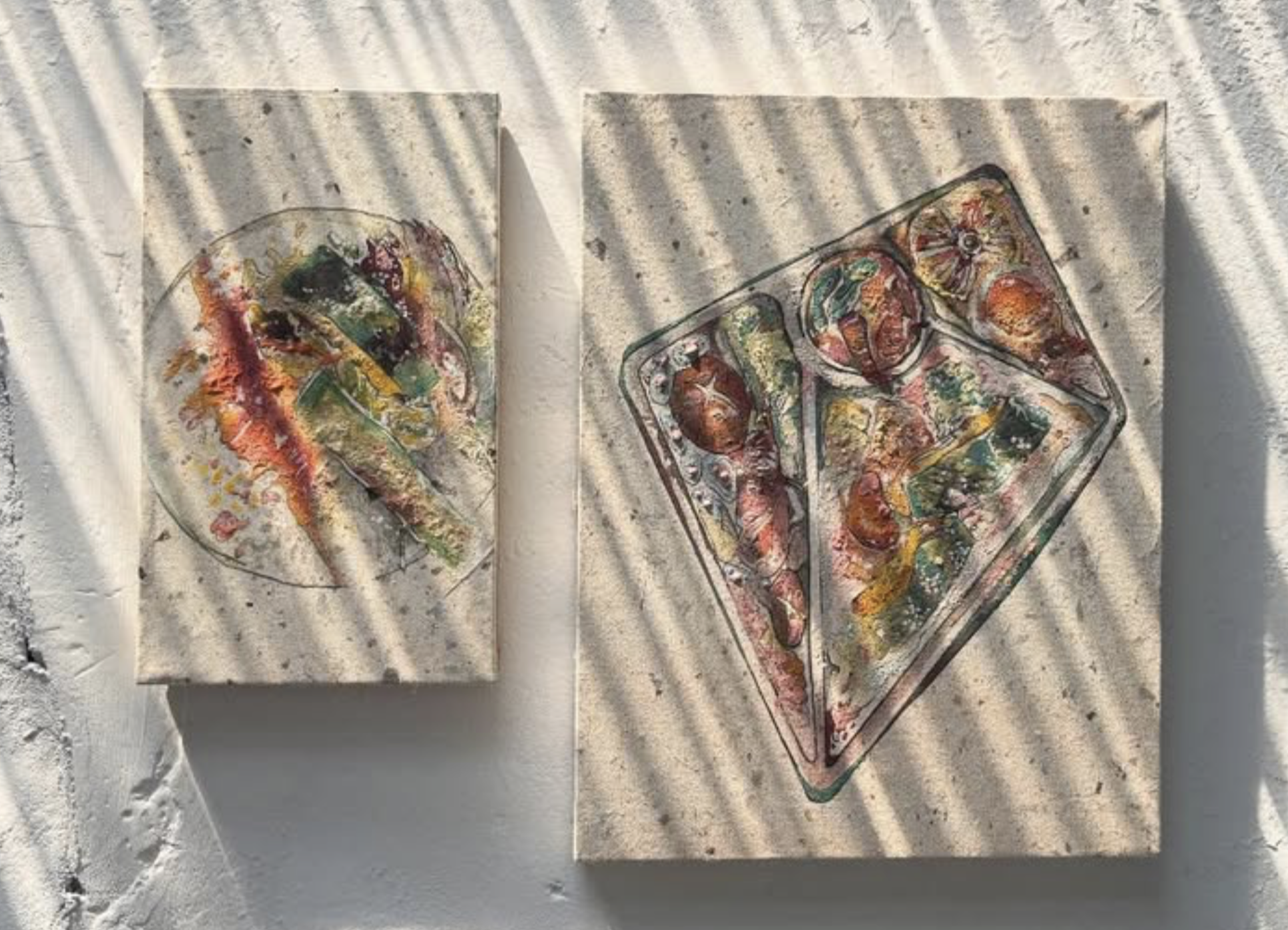
Tsai’s work begins with leftover food — a material condition that is routinely excluded within everyday systems of civilisation — and extends into a reflection on the relationships between humans, objects (food waste/leftovers), and contemporary society. The dining table, as a highly structured and civilised everyday site, not only facilitates consumption but also operates through mechanisms of selection, exclusion, and waste. By reintroducing leftover food into contexts of ritual and commodification, the work points towards the systems through which value and culture are constructed within contemporary consumption.
Within this framework, the dining table is not only a site of acquisition, but also one of disposal. What we retain and what we discard often reflects both individual consciousness and the value structures embedded within the cultural systems we inhabit. These excluded materials, therefore, are not simply without use, but can be understood as cultural residues produced through conditions of intensified modernity, carrying traces of everyday ritual.
This approach also reflects the artist’s engagement with ‘‘Actor-Network Theory’’. Food waste, as an object, is not merely a passive carrier of human intention, but is removed from its original cycle of consumption and retranslated into artistic and exhibition contexts. Through this shift, these previously disregarded materials re-enter a process of social negotiation, where value is no longer fixed, but continuously redefined.
-
蔡昕恩(b.2005,高雄)現就讀國立彰化師範大學美術學系。
筆名:日斤,「日斤」源於創作者的名字中的中央字「昕」的拆解,熱愛文字與人文社科理論中,也對於無價值物件有著強烈的迷戀,廚餘與飲食文化作為其創作脈絡的重要軸線。
蔡昕恩的創作脈絡,從「剩食」這一被日常文明迅速排除的物質狀態出發,進一步反思「人—物(廚餘/剩食)—文明社會」之間的關係。餐桌作為高度制度化與文明化的日常場域,不僅承載飲食行為,也同時運作著選擇、篩除與浪費的機制,創作者將剩食重新帶回儀式性與商業化之中,指向當代消費結構中對價值性與文化的判斷。
在此脈絡下,餐桌不僅是獲取之地,也是捨棄之地——我們所留下與丟棄的,往往反映出個人意識與所處文化體系的價值邏輯。這些被排除的物質,因而不只是無用之物,更可被視為過度現代化下所產生的「文化排遺」,甚至帶有某種日常性的「儀式痕跡」。
此一創作取徑亦呼應藝術家對行動者網絡理論(Actor-Network Theory)的關注:剩食作為「物」,不僅於被動承載人類意圖的對象,更為自既有的消費循環中抽離,並轉譯至藝術與展示系統之中,這些原本被視為無價值的物件得以再次進入社會性的動態協商過程。
《Excrementperfume()》
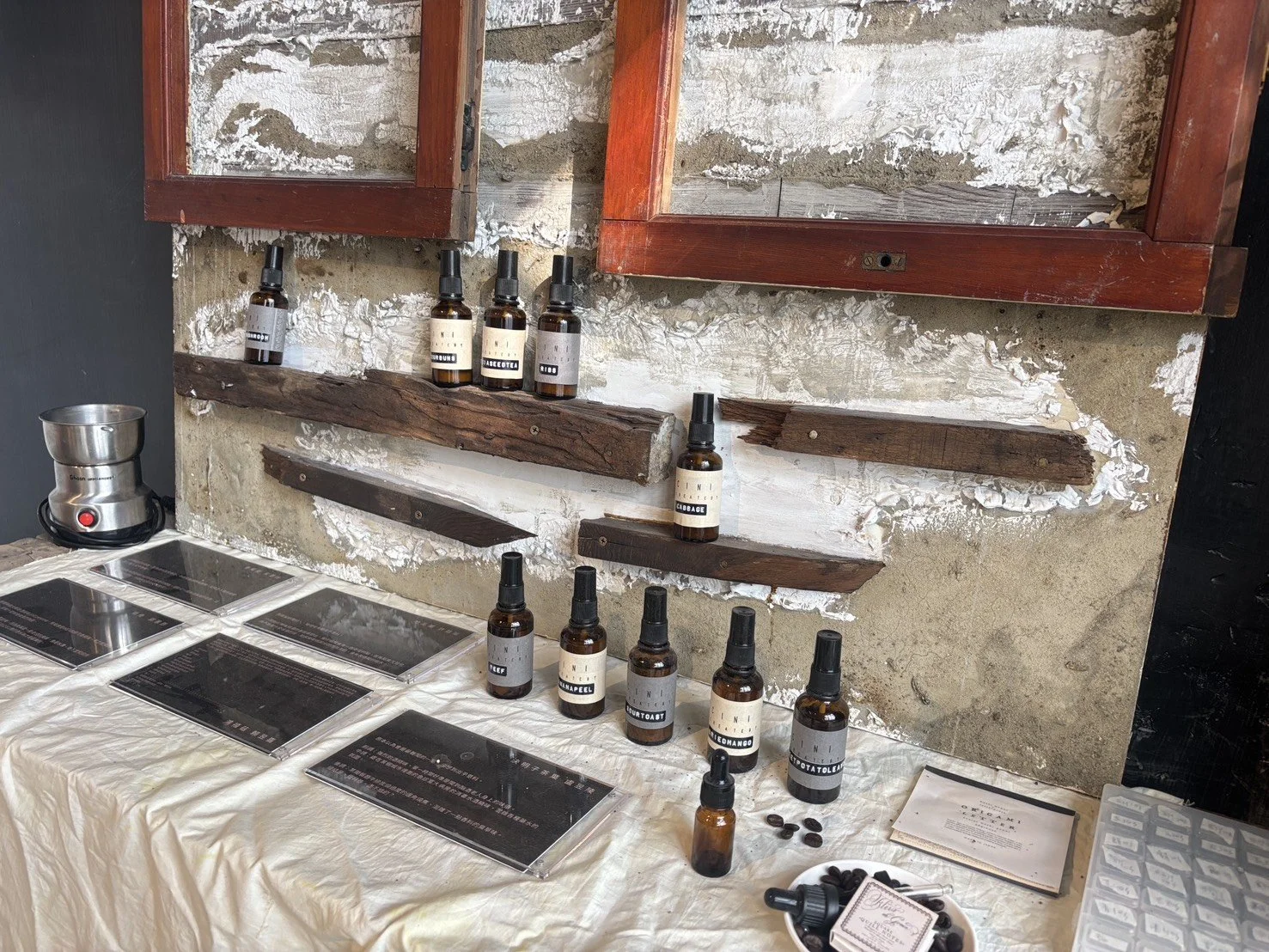
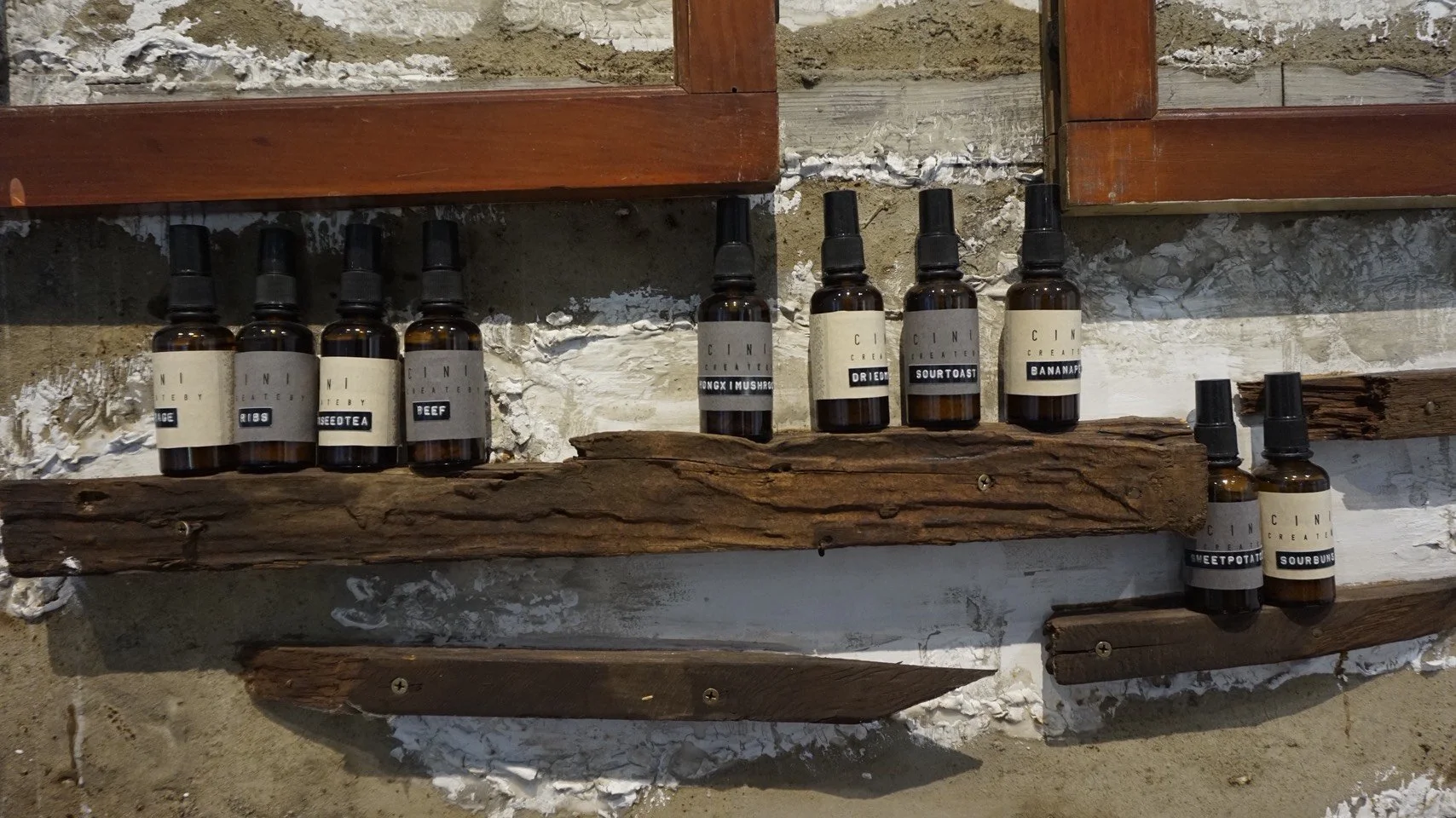
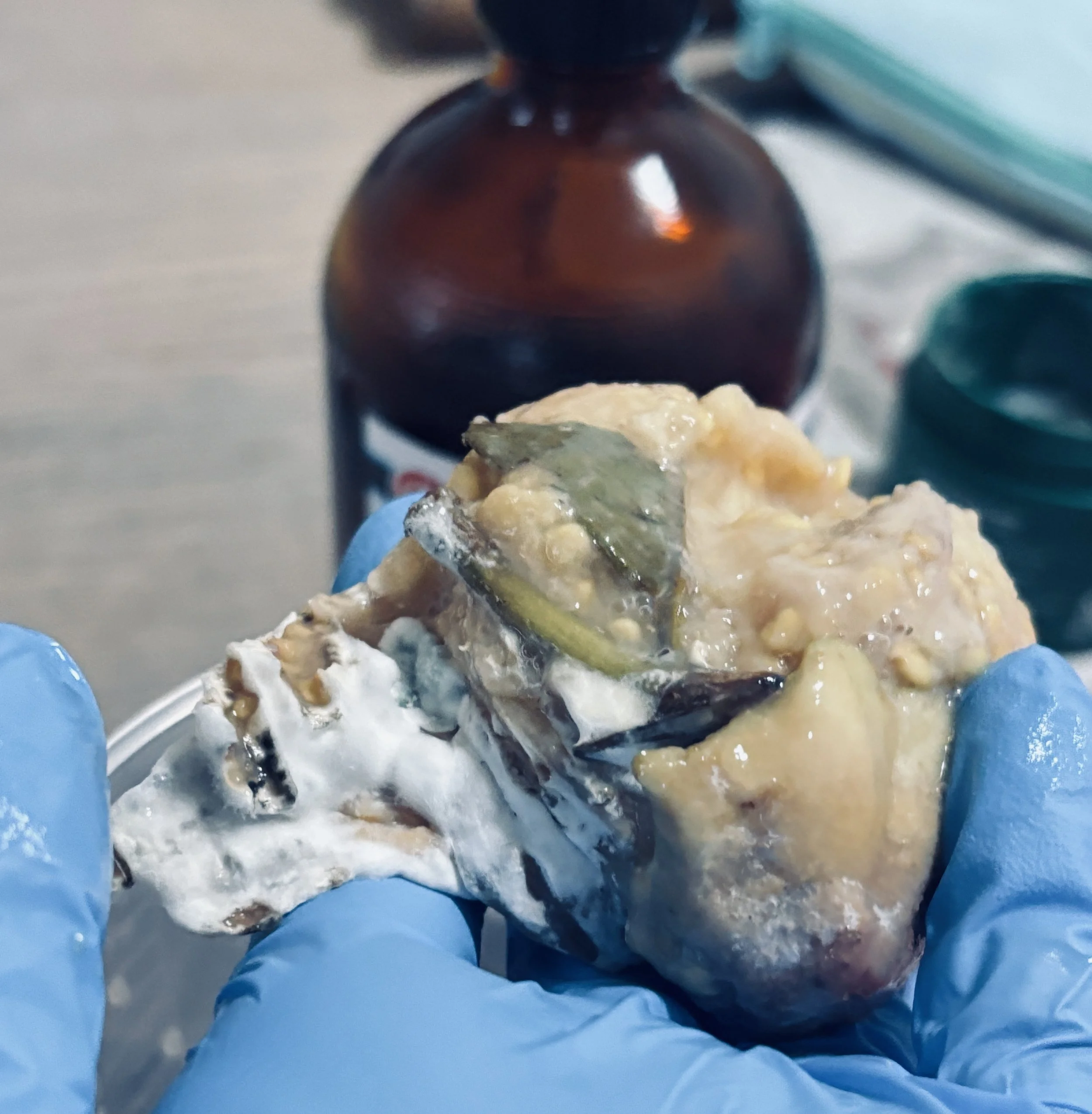
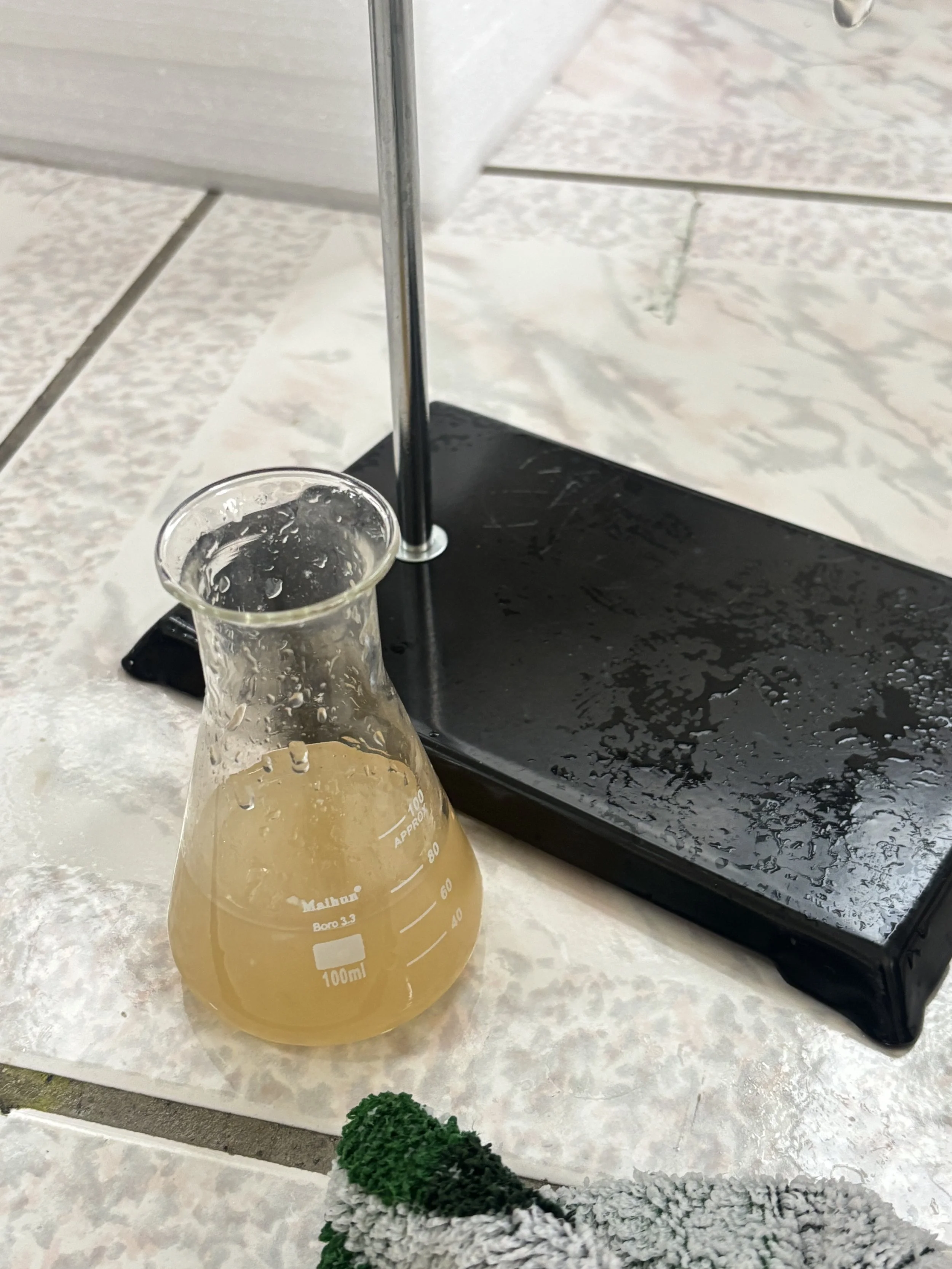
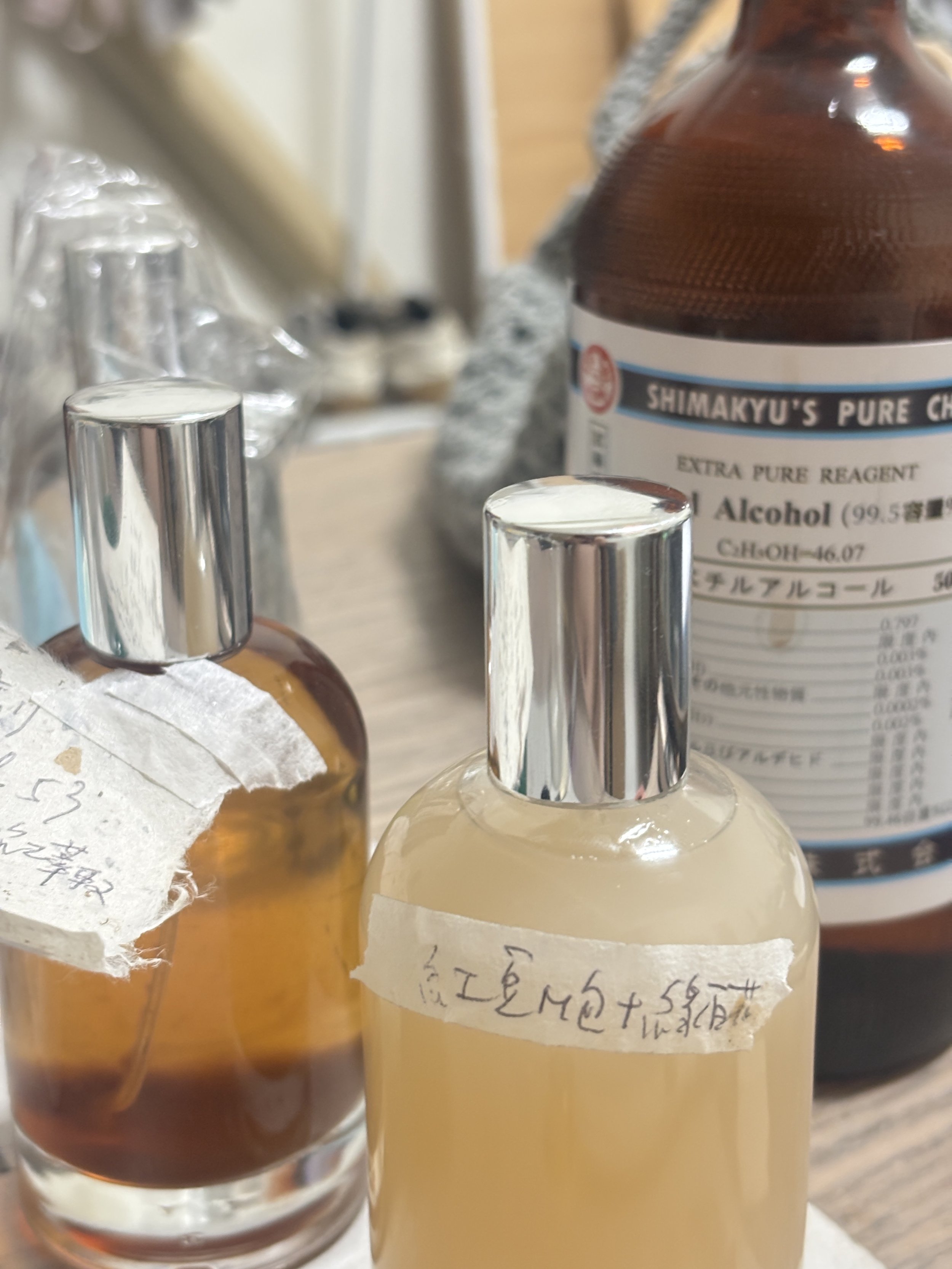
Extending from the inherent olfactory qualities of found materials such as food waste, the work 《Excrementperfume()》develops this line of inquiry through the medium of scent. In this series, smell is approached as an artistic subject. Dried food waste, or previously moist waste that has been air dried, is processed into granular forms to support the diffusion of scent, and is then combined with a prepared perfume base and fragrance compounds.
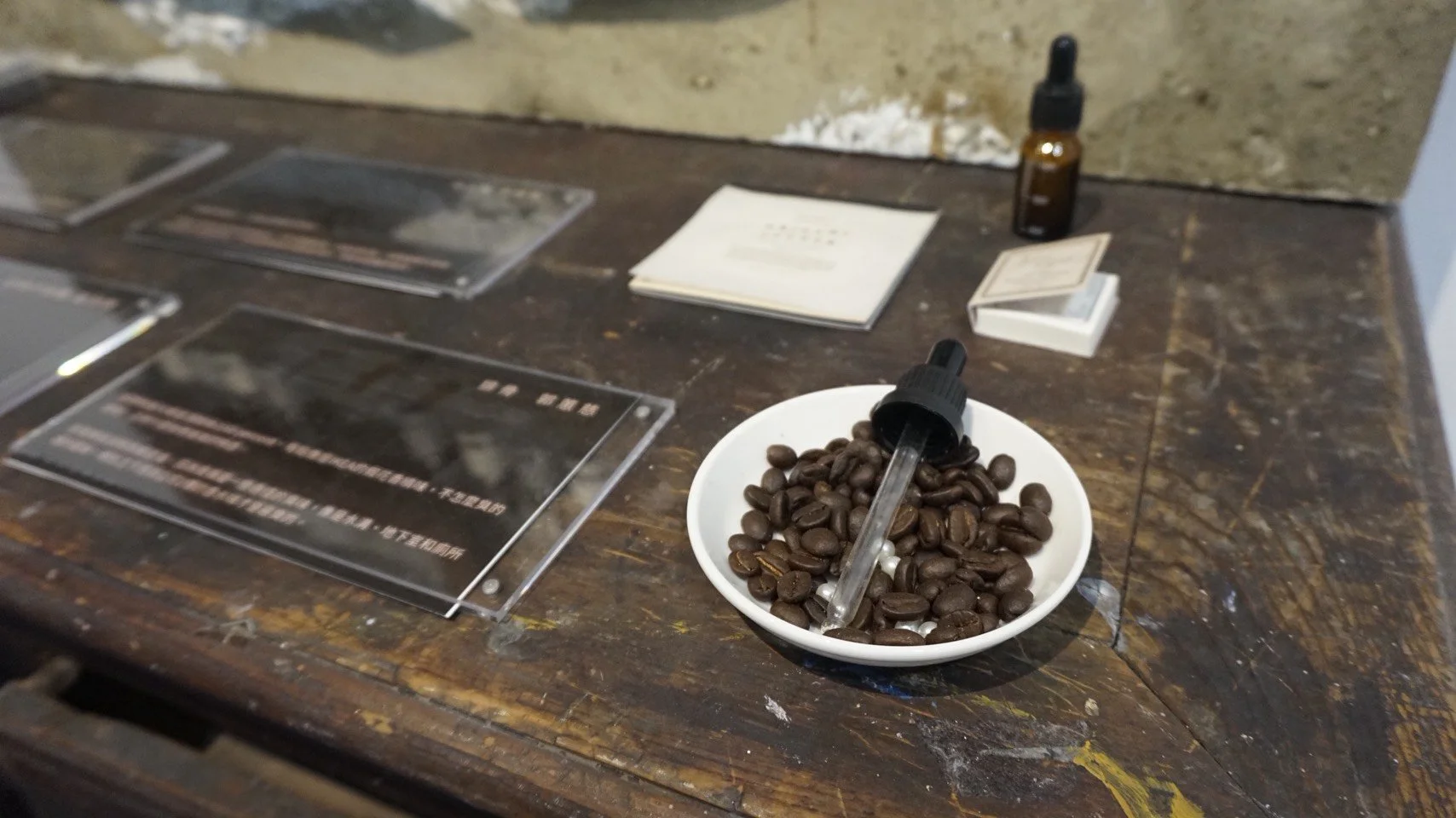
As smell operates as a highly personal sensory experience, the artist observed through experimentation that individuals vary significantly in their tolerance and interpretation of these unfamiliar or unconventional odours. In response, each perfume is presented alongside a written reflection and evaluation provided by an invited participant, offering a subjective account of their encounter with the scent.
The naming of the work also gestures towards a response to Rirkrit Tiravanija, suggesting that awareness of one’s own smell emerges through relationships between people. By altering the expected nature of perfume, the artist further explores how, within the frameworks of civilisation, relationships between people and objects, particularly those considered to be undesirable or lacking fragrance, are constructed and understood.
-
《Excrementperfume()》
從現成物(廚餘)本身的氣味特質延伸至廚餘香水《Excrementperfume()》的部分,此系列作品以「氣味」藝術題,將乾性廚餘或是被曬風乾後的濕性廚餘打成合適的顆粒狀(氣味擴散之用),並與調製的香水基劑與香氛精作結合,而因氣味屬於較個人的感官印象,創作者在實驗的過程中也發覺每個人對於這種「怪」味的接受程度不同,故在展示方式會提供每一 香水,且皆有一位受訪者的個人思考與品評(文字記錄),作品名稱也是似於回應里爾吉.迪拉瓦尼的作品,人們開始會關注自身的氣味是源於「人-人」之間的關係,而創作者藉由改變香水的本質,還去探討文明的定調下「人-物(不香的香水)」之間的聯繫。
Concept
《Excrementperfume()》begins with the smell of food waste, transforming discarded ingredients through processes of drying and grinding into experimental perfumes. The work challenges the conventional association of perfume as a symbol of refinement and civilisation. It responds to the ways in which bodily odour is both monitored and concealed, while also reflecting on how systems of capital and culture condition the rejection of decay, smell, and what is perceived as unclean.
Each bottle is accompanied by an individual’s written sensory response, allowing private olfactory experience to enter a shared public dialogue. Through this, the work invites viewers to reconsider the boundaries between what is understood as pleasant and unpleasant.
At its core, the project asks whether transforming waste into a wearable scent redefines the relationship between people and objects, or whether it operates as a critique of established sensory hierarchies within civilised structures. Here, perfume becomes a container for memory, smell, and cultural residue, allowing waste and fragrance to coexist within a single form. This coexistence encourages a renewed attention towards what is typically overlooked in everyday life, particularly in relation to sensory perception. Drawing on a semiotic framework, the work challenges fixed associations between objects and their expected smells, proposing instead a form of smelling that resists prior experience.
Process
Collection of food waste materials from the campus and surrounding local businesses
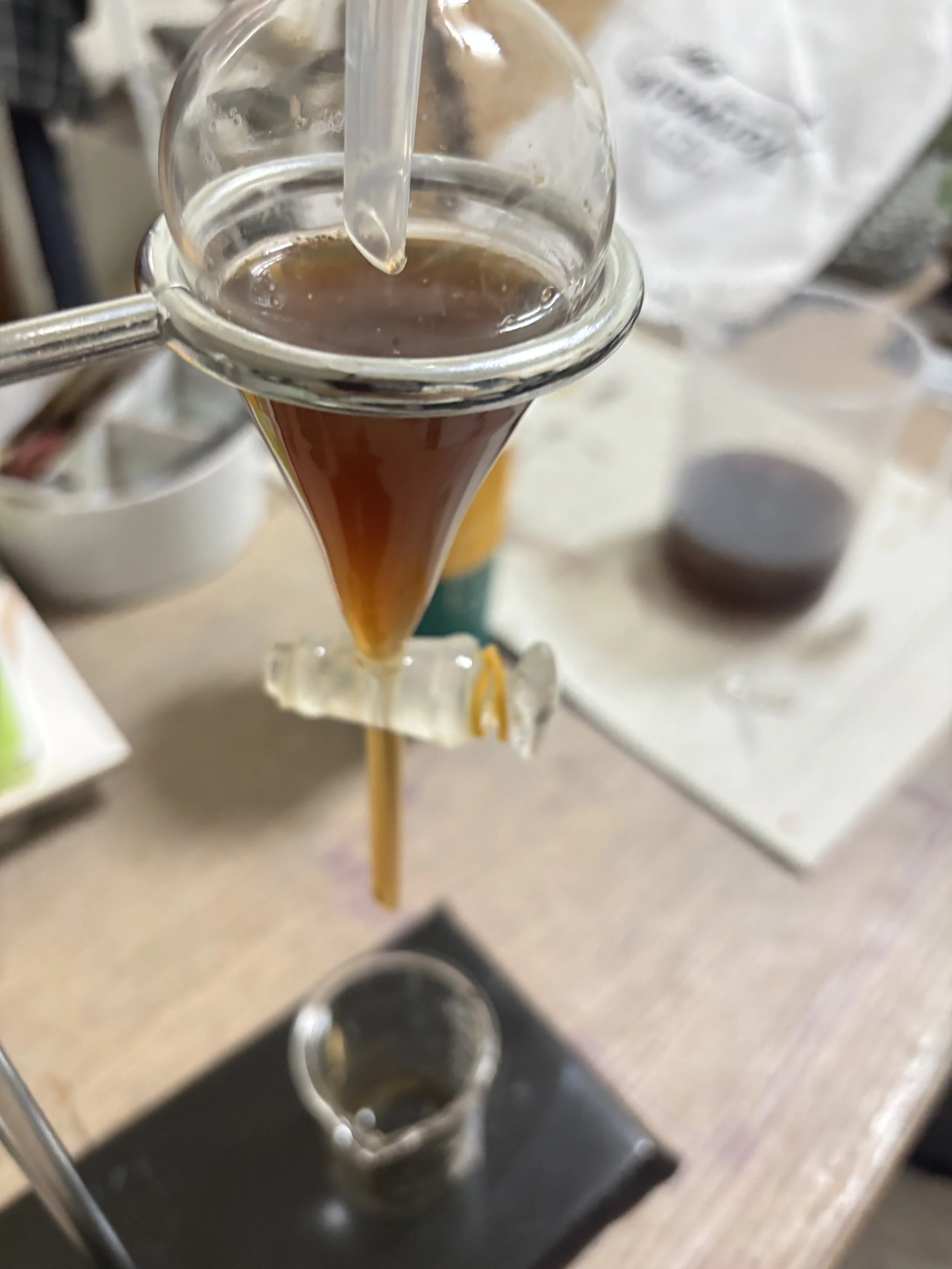
Preparation using ethanol, essential oils, and dried food waste processed into fine particles
Blending of materials, followed by a resting period of one to two weeks for distillation and filtration
Production of packaging and bottling of the perfumes
Selection of approximately ten participants from varied backgrounds for evaluation
Each participant produces a written response of 100 to 200 words
The artist translates these responses into a stylised, brand oriented textual format
Development of the display format, including branding, display structures, scent diffusion tools, and sampling devices
-
創作理念
《Excrement perfume ()》以廚餘氣味為出發,透過乾燥與研磨後的剩餘食材製作成實驗性香水,挑戰香水作為文明象徵的既定意義;這項創作回應人們對體味的關注與遮蔽,也反思人類如何在資本與文化框架下排斥腐敗、氣味與「不潔」之物。每瓶香水皆搭配一位受試者的嗅覺評語,讓個人的感官經驗轉化為公共對話,引導觀者重新思考「香」與「臭」的界線。
作品想以此探問當我們將廢棄物轉化為可穿戴的氣味時,是否也在重新定義人與物之間的關係,或是這是物質對文明嗅覺秩序的批判與感知重構;且香水在此成為承載人類經驗記憶、氣味與文化剩餘的容器,使「廢」與「香」在同一瓶中共存,觸發人們對於日常中被忽略之物的重新凝視,尤其針對感官的界限,符號學觸發我們往往會對特定物件的嗅覺感官是既定的, 而此香水作品就是想詮釋一種「非經驗」的嗅吸破除。創作流程
1.收集廚餘食材/從校園與周邊商家開始2.無水酒精/精油/曬乾且打磨成粉末之廚餘粉
3.混和後靜置 1-2 週進行蒸餾與過濾
4.印製包裝並進行輸出/分別裝罐
5.選擇約 10 位不同生命歷程的同學師長進行品評
6.請評者留下 100-200 字文書紀錄
7.創作者轉譯為具品牌式的文字輸出
8. 展示形式處理;品牌格調/展示櫃/轉味用具/試香用具
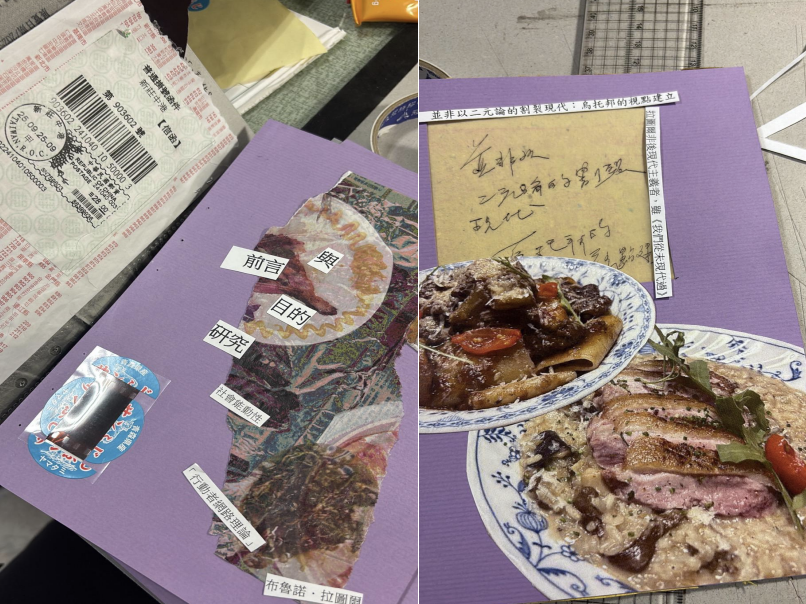
The artist’s book
The artist’s book often functions as a private, diaristic space for practitioners working with text based systems. 《日斤》, as both the title of the book and the artist’s working name, corresponds to the central character 「昕」 in the artist’s given name. It also reflects a personal discipline, suggesting a daily commitment to writing as an ongoing practice.
《日斤》 centres on the artist’s engagement with Latourian thought and a way of thinking about art as a condition for living. Alongside this, the book incorporates photographic records of residual materials from the artist’s practice. Beginning from 「日斤」, it extends into a broader proposition of continuous writing and reflection embedded within everyday processes.
As an artist’s book, 《日斤》 operates as a fragmented assembly of theory and image, while also functioning as a material extension of the artist’s thinking. Textual elements, particularly those relating to Actor Network Theory, are reworked through collage, handwriting, layering, and overlap. These fragments become active components within the work, entering into dialogue with images and material traces.
The discontinuities within the text, together with the constructed surfaces of paper and composition, form a network like structure. Through this, theoretical frameworks and lived artistic experience are translated into both visual and textual language. Each act of reading becomes a process of reconstruction, through which the proposition emerges that art can be understood as a network, as a tool, and as a form of social inquiry.
-
蔡昕恩-藝術家的書
「藝術家的書」(Artist’s Book)對於有文本系統的創作者是一個彷彿私密記事般的存在;《日斤》作為書名是對應到我名的中間字「昕」,同時也為我的筆名,這本書圍繞在我本身的對拉圖理論概念與奉為生存的藝術思考,與在創作中的一些剩餘物的照片記載,從「日斤」出發,更帶出背後「日日寫字一斤」的自我期許。
《日斤》作為我的藝術家的書,是理論與影像的片段式集合,更是我創作思維的物質化延伸,書中的文本特別是關於拉圖行動者網絡理論的片段透過剪貼、手寫、重疊與層疊,成為與我創作中剩餘物、照片記錄對話的「行動者」。文本中的割裂與紙材的拼湊都塑造為ㄧ網路,體現將理論與自身創作經驗交織、再轉譯成文字和視覺語彙,每一次觀者的翻閱都構築出「藝術是一種網路,藝術是一種工具,藝術是一種社會性解方。」之藝術社會學的思考。
Artist Info
Shin-En Tasi
National Changhua University of Education, 3rd Year
Practice
Installation, Gouache Painting
Portfolio
Mandarin Version
English version can be requested.
Instagram
@_cini._.art |@_shin.en_ciniart