
張貽菻
Yi-Lin Chang
Yi-Lin Chang’s practice explores the complex relationships between humans, society, and technology, often employing the material properties and associative qualities of specific materials as a visual language through which to reflect upon and observe everyday life.
Recent research has focused on speculative design and design fiction, extending further into questions of interspecies perception and the diverse possibilities emerging through the interaction between forms of life and social structures. Recent exhibitions include This Is Light at 241 Art Space (2026), 2049 Mazu Lunar Space Station at C-LAB(2025), and Traversing x Networking at Capital Art (2024).
-
其創作關注人、社會與科技三者間的複雜關係,多運用特定材料的物質特性及指涉作為創作語彙,提出對日常的觀察與反思。近期研究聚焦於推測設計與設計虛構,並進一步延伸跨物種感知,探索生命形式與社會結構交織的多種可能性。近期展出包括2026年241藝術空間《這就是光》、2025年C-lab《2049 媽祖遶月太空站》、2024年首都藝術《Traversing x Networking》等展覽。
《他頻誌》
Philosopher Thomas Nagel once posed the question, “What is it like to be a bat?”, highlighting that perception is never neutral. Every living being exists within a world shaped by its own sensory apparatus, and no single perspective can claim greater proximity to “reality”. Biologist Jakob von Uexküll described this as Umwelt — the unique phenomenal world constituted through the perceptual capacities of each organism. These worlds exist in parallel, each internally coherent in its own way. Bees perceive ultraviolet patterns invisible to the human eye; ants construct collective chemical languages through pheromones; weakly electric fish detect subtle fluctuations in electric fields underwater; and mantis shrimp possess sixteen types of colour receptors, far exceeding human visual perception. Each species senses, responds to, and understands the shared world through its own distinct mode of being.
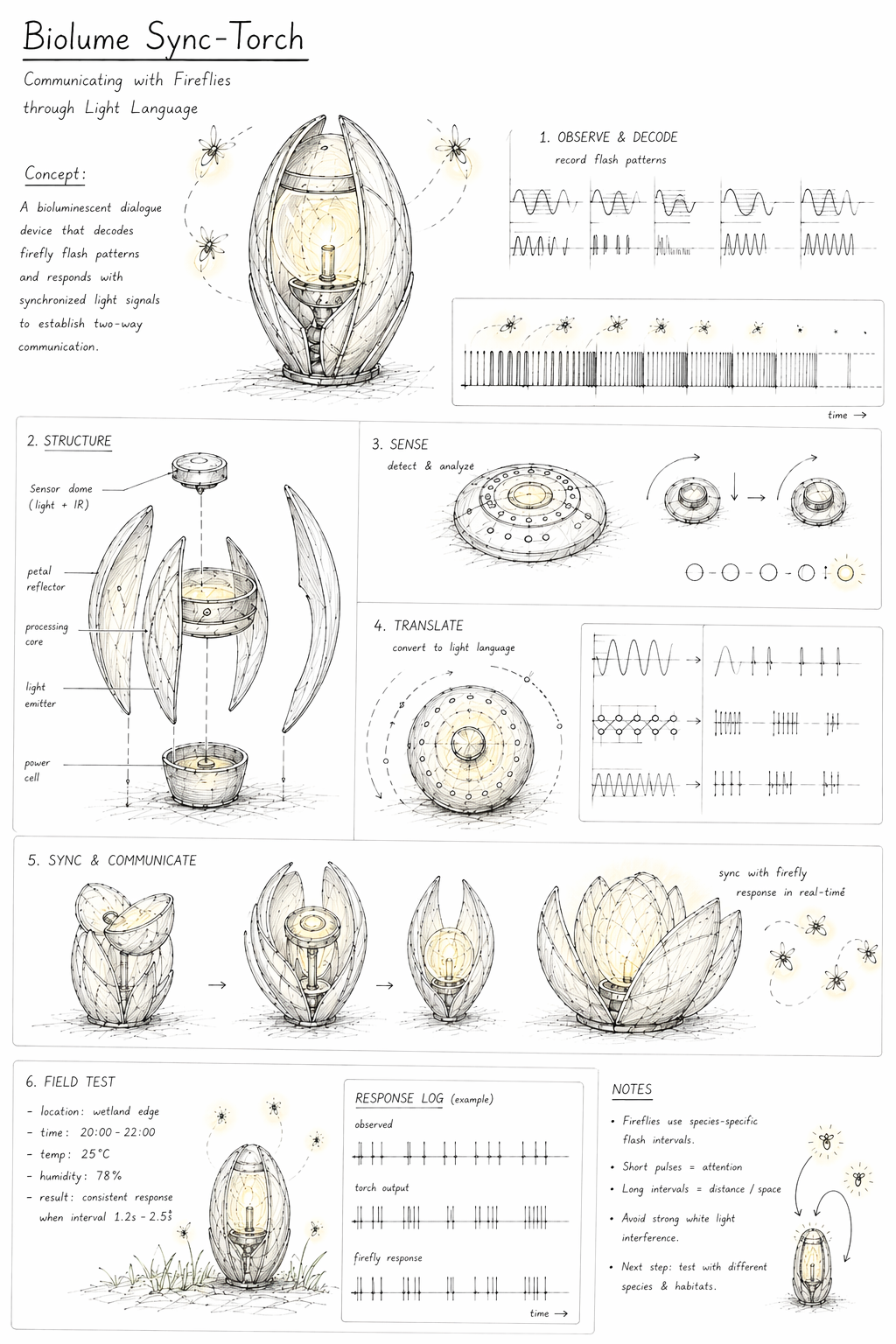
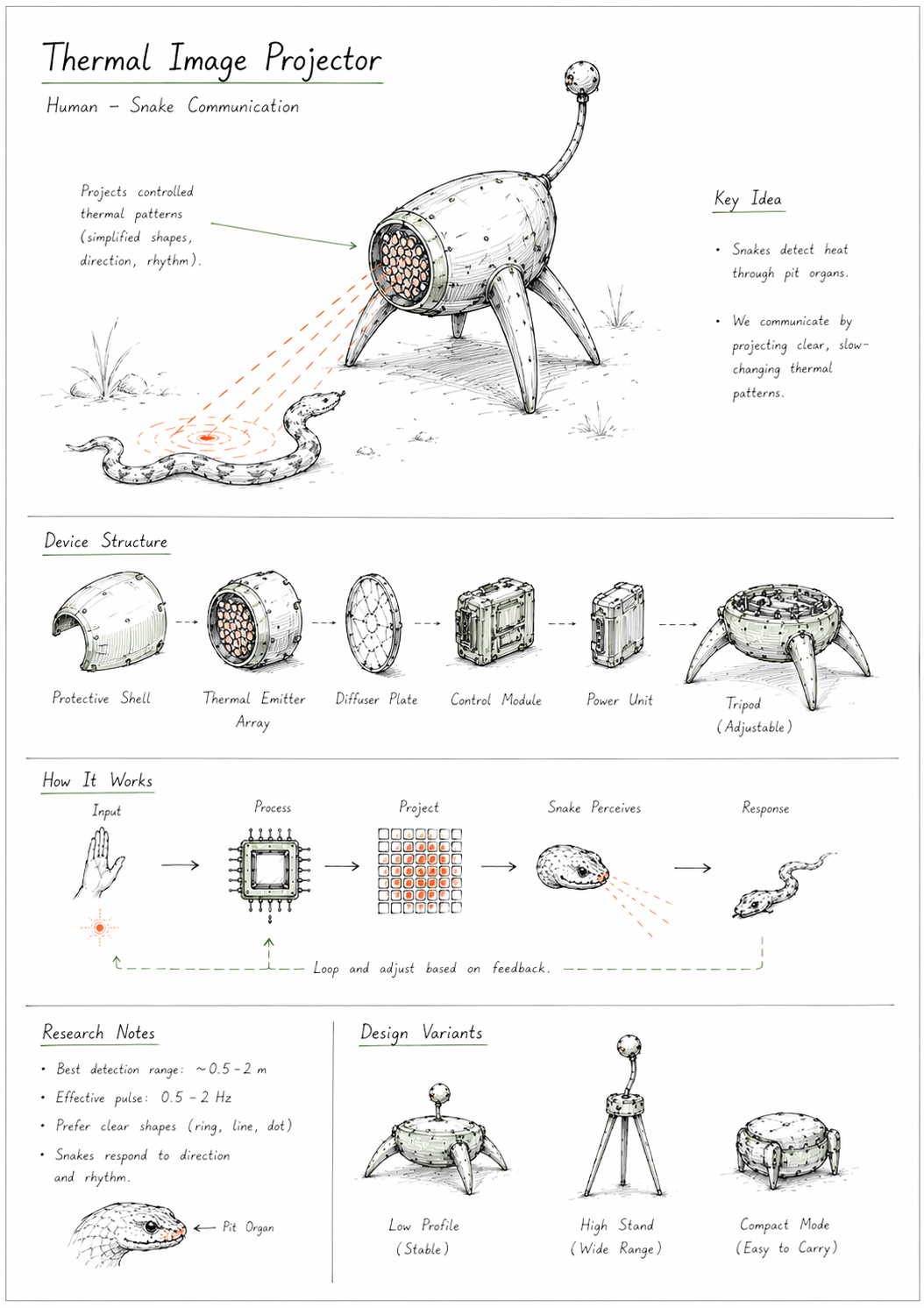
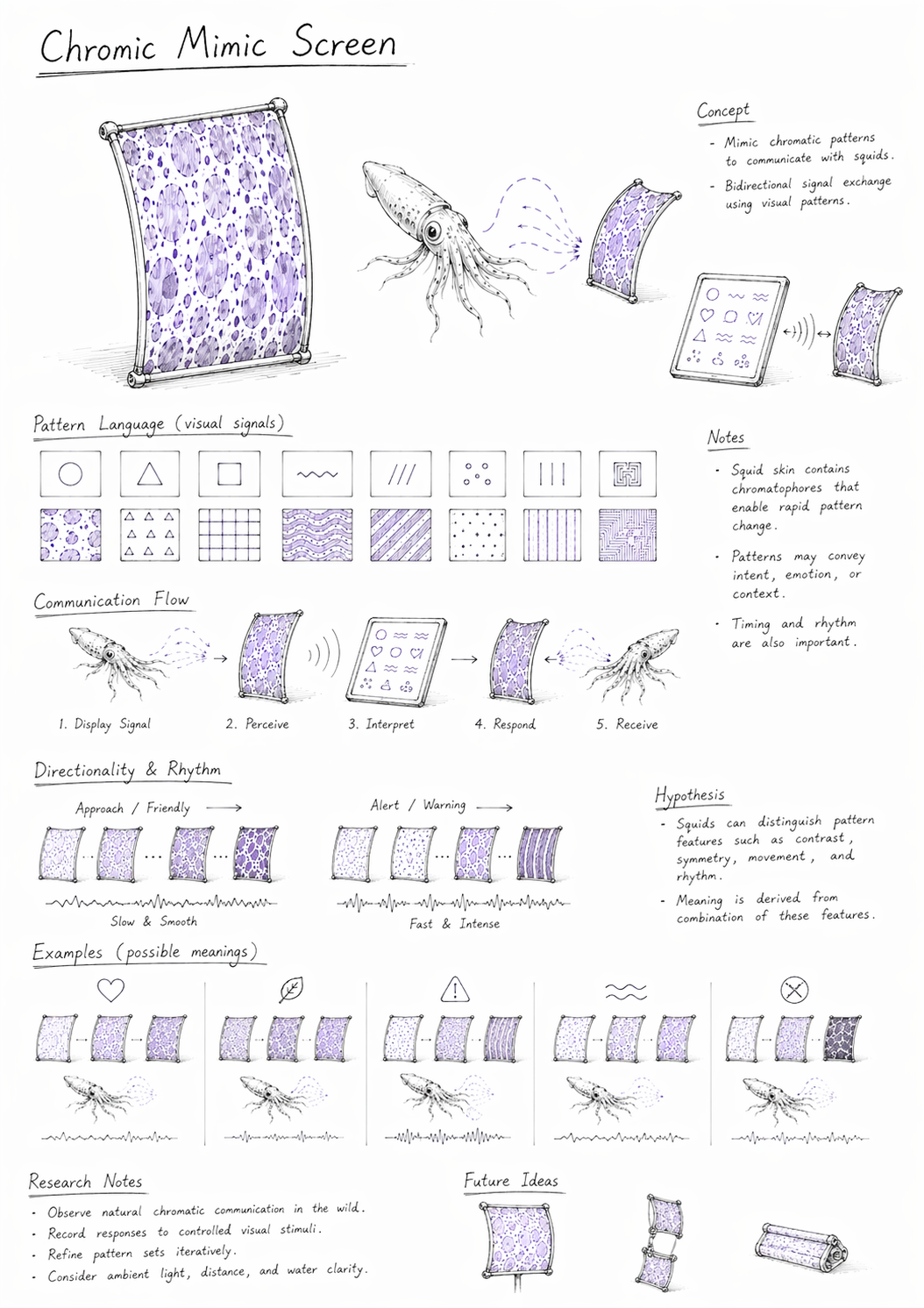
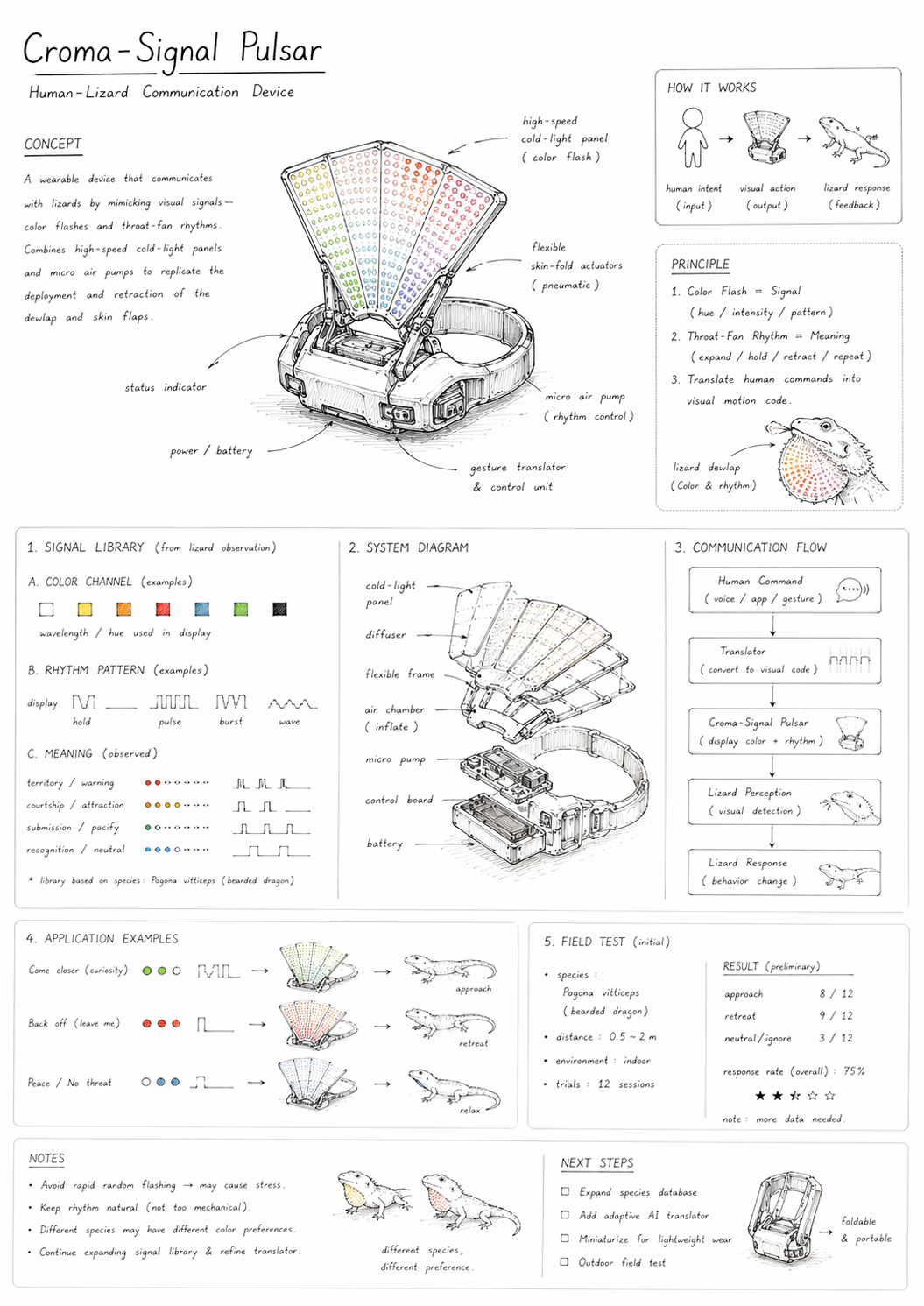
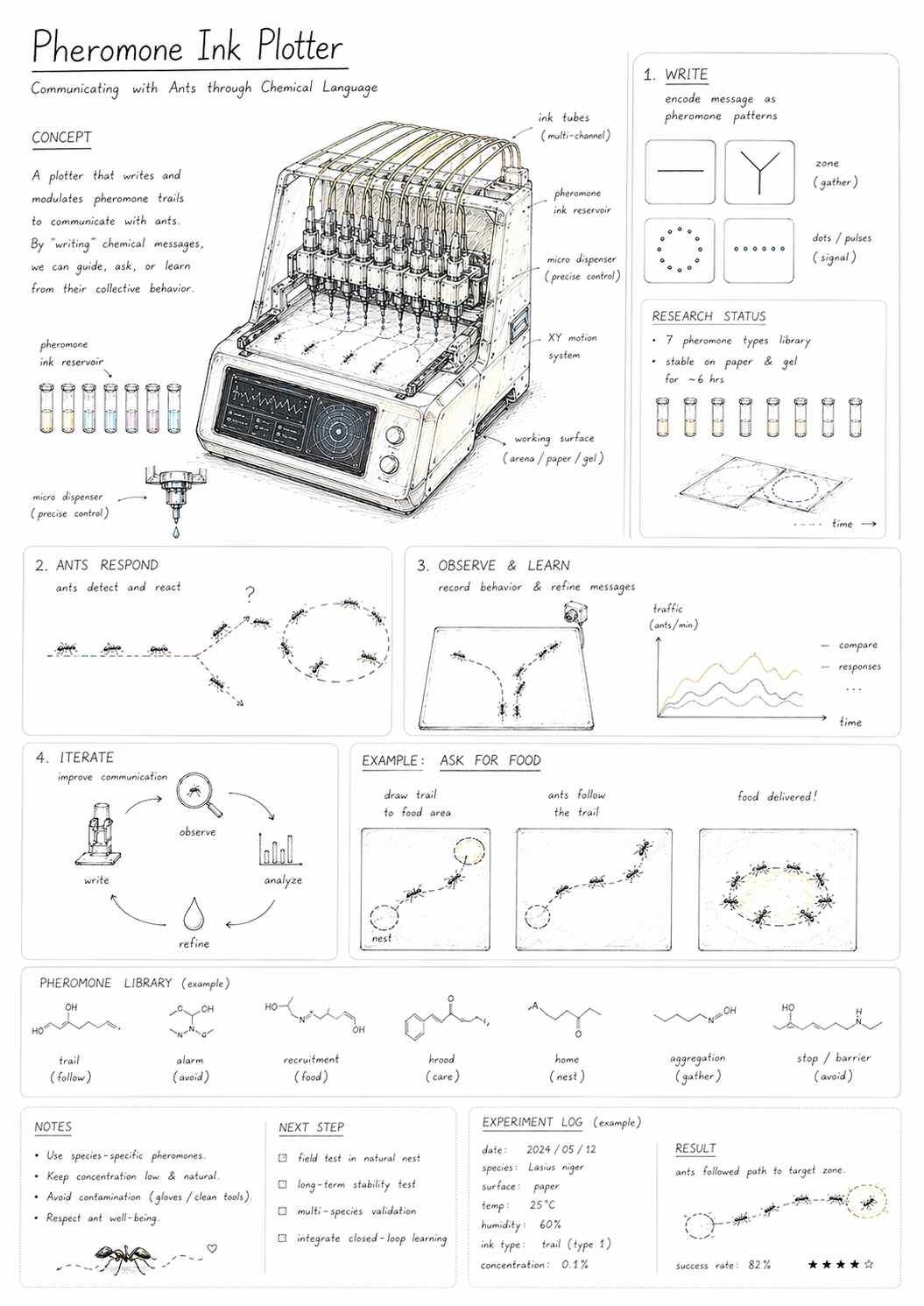
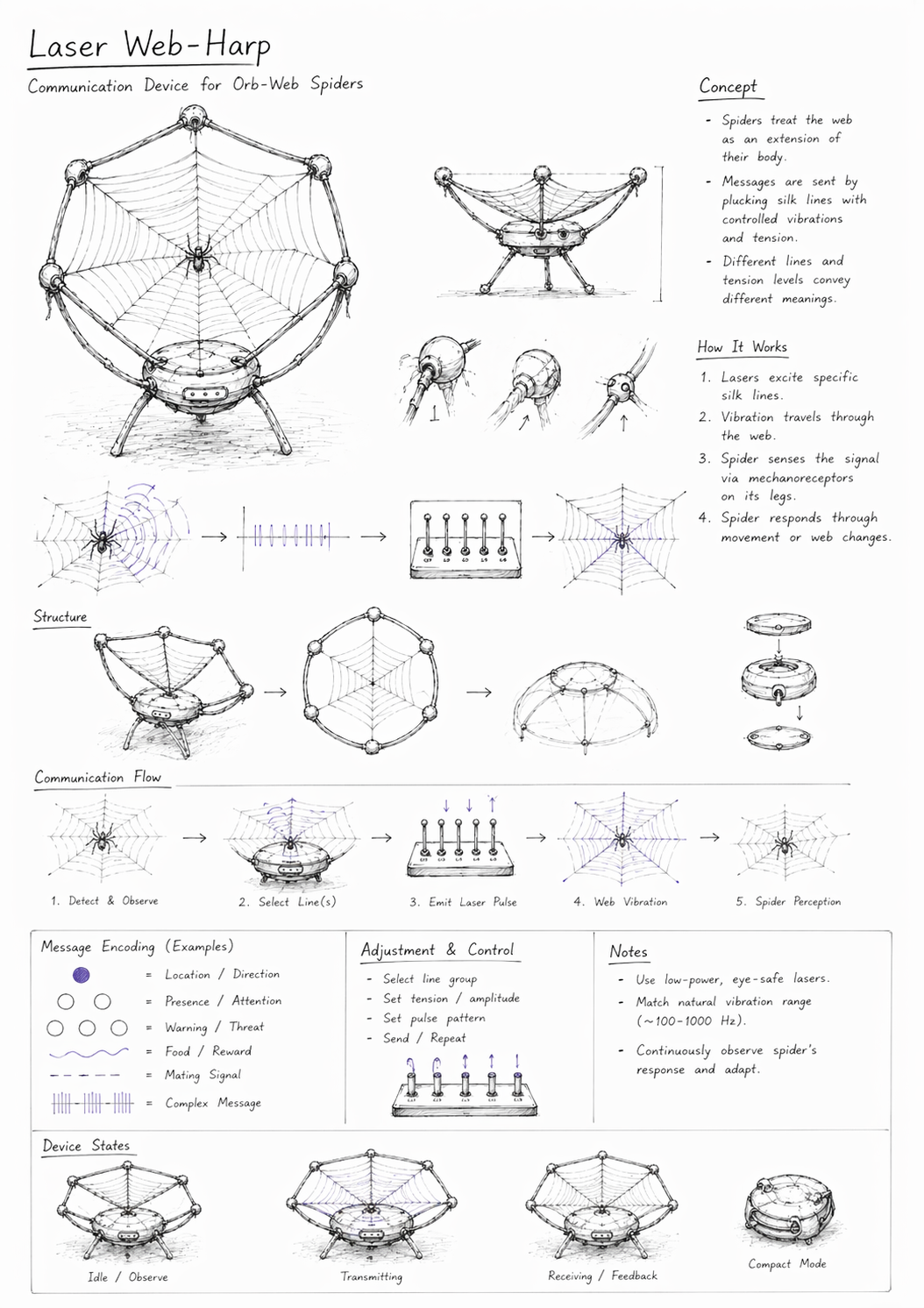
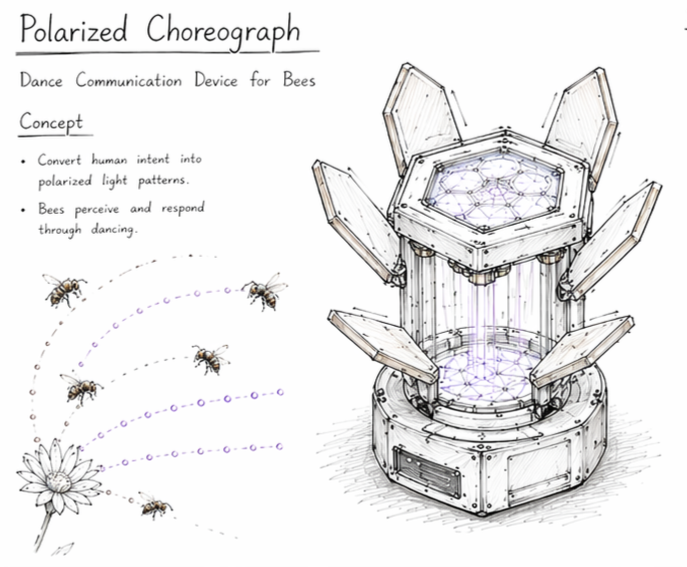
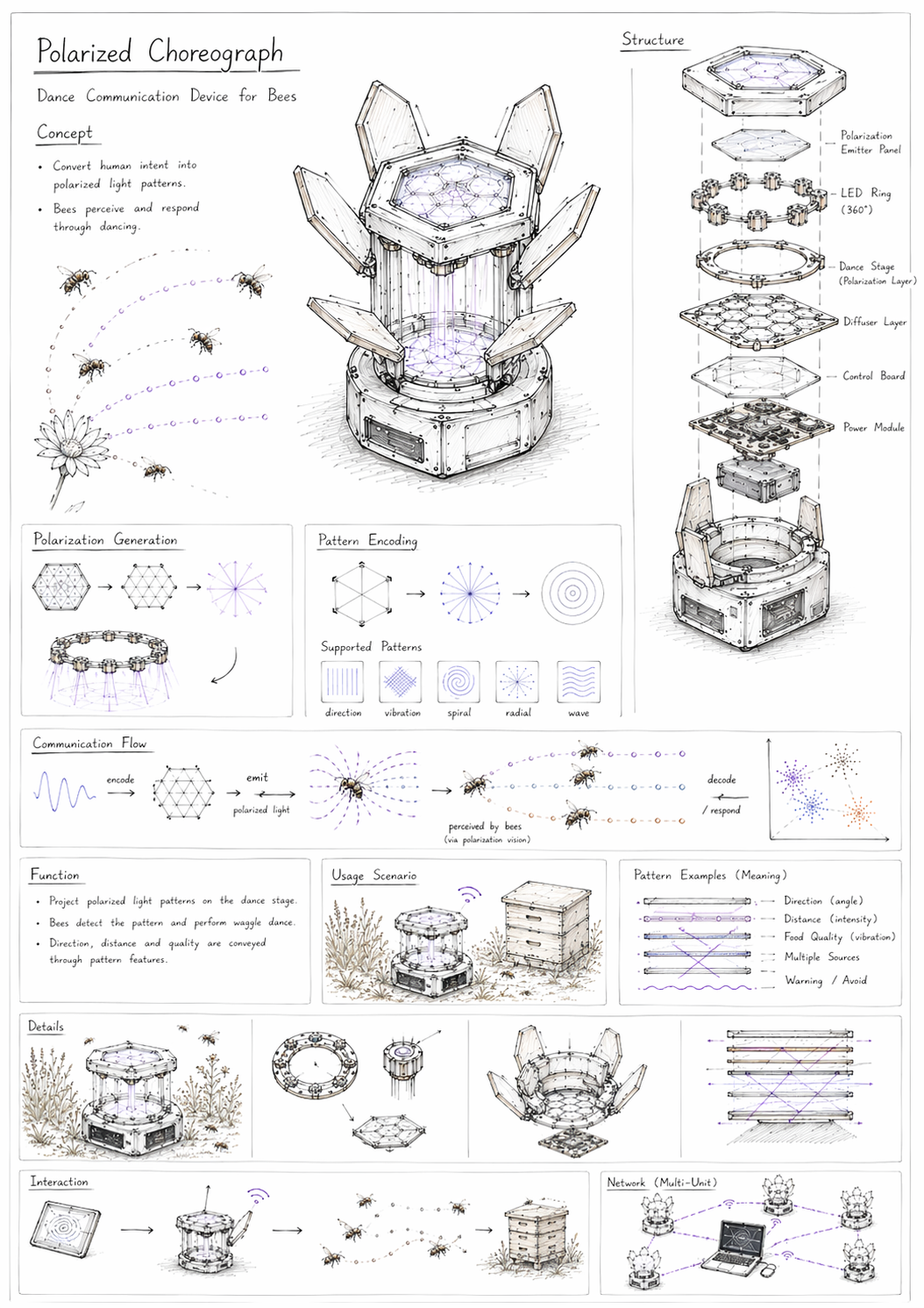
The Other Frequency Journal takes these ideas as its point of departure. Presented in the form of hand-drawn manuscripts, the work consists of a series of speculative design sketches for imagined interspecies communication devices. Each drawing functions simultaneously as a structural diagram, operational proposal, and research note. These devices are ultimately impossible to realise, yet through their speculative construction they expose the narrowness and contingency of the perceptual frameworks humans habitually rely upon. Rather than seeking definitive answers, the work uses acts of imagining and designing as a means of opening new perspectives on encounters with other species. In seriously attempting to imagine how one might communicate with a fish, a bee, or a snake, the work suggests a possible starting point for reconsidering how coexistence between humans and other forms of life might be understood.
-
《他頻誌》作品介紹:
哲學家湯瑪斯·內格爾(Thomas Nagel)曾提問「成為一隻蝙蝠是什麼感覺?」,點出感知從來不是中立的,每一種生命都活在自身感官所編織的世界之中,無從宣稱哪一種更接近「真實」。生物學家馮·于克斯屈爾(Jakob von Uexküll)將此命名為「環境界」(Umwelt),每一種生物都棲居於自身感知所構成的獨特現象世界,彼此平行,各自自洽。蜜蜂看見人類肉眼不可見的紫外線圖樣,螞蟻以費洛蒙書寫集體的化學語言,弱電魚在水中感應微弱的電場變化,螳螂蝦則擁有遠超人類的十六種色彩感受器。不同物種皆以各自的方式感知、回應,乃至理解這個共同棲居的世界。
《他頻誌》以此為出發點,以手稿形式呈現一系列假想跨物種溝通道具的設計草圖,每張草圖兼具裝置結構、運作流程與研究筆記。這些無從真正運作的裝置,試圖讓我們意識到自身慣用的感知框架有多麼狹窄、有多麼偶然。作品無意抵達答案,而是透過對裝置的想像與設計,開啟一種與他物種相遇的新視角,當我們開始認真想像如何與一條魚、一隻蜂、一頭蛇溝通,或許也正是人類與其他物種之間共存關係重新被定義的起點。